
overview
Steve is an independent automotive consultant operating as a personal brand across multiple dealerships. He required a portable visual identity that could follow him from location to location, ensuring long-term customer retention independent of dealership branding.
In a saturated market where 10+ salespeople use identical, templated materials, Steve needed to break through the "corporate noise." His target audience, predominantly older clients, often held a baseline distrust of the car-buying process. The goal was to create a distinct, approachable identity that reduced intimidation and increased recall.
challenge
Approach
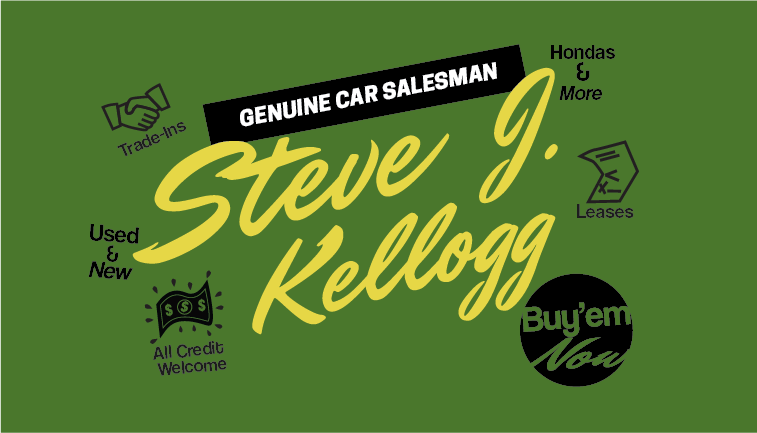
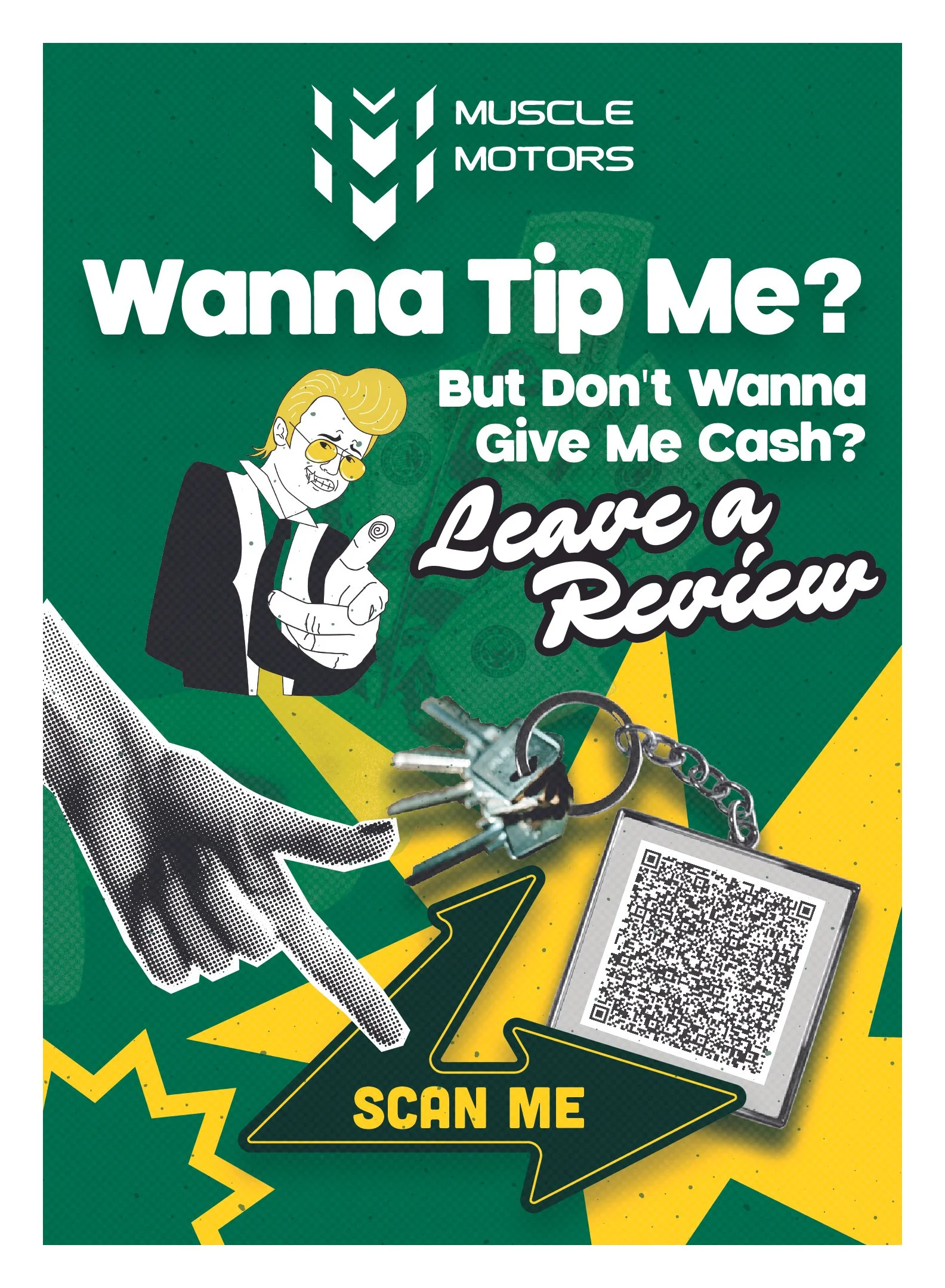
I translated Steve’s transparent, humor-driven sales approach into a cohesive visual system. By leaning into a high-trust, retro-inspired aesthetic, the design intentionally departed from the polished, cold look of standard dealership collateral to make Steve feel more human and accessible.
Visual Identity: Utilized 1970s-inspired typography and bold graphics to evoke nostalgia and instant memorability.
Information Hierarchy: Prioritized Steve’s name through scale and placement, using a high-contrast scripted font on the reverse to feel personal and eye-catching.
Illustration: Integrated playful graphic elements as a visual shorthand for approachability, signaling a "friendly expert" persona.
Color Palette: Selected a warm, high-contrast palette to differentiate Steve’s materials from the standard blue-and-white dealership cards.
Adaptability: Designed the system to be flexible, allowing it to scale across flyers and digital assets while maintaining consistent recognition at different locations.
Design
Result
The branding became a primary reference point for Steve’s clientele, significantly improving follow-up communication. By using the identity as a visual cue, Steve successfully reinforced his personal brand across multiple environments, consistently holding the top sales record at his location over a five-month period.